Snaptub-è Video Downloader
- 3.8
- Rating
- 10.00M
- Installs
- Free
- Price

 Analysis by App-foxy
I spent time with Snaptub-è Video Downloader to understand its main promise: making it easier to save videos and music from Facebook and other supported online sources for later use. That single purpose shapes the whole experience. This is not an editing suite, a streaming service, or a social network. It is a free Android app in the video players and editors category, built by stormstudio, and its appeal depends on whether you regularly want a copy of online media available when you are away from a reliable connection.
My first impression was that the app is aimed at people who want a direct workflow rather than a long list of creative tools. You find something worth keeping, pass it through the downloader, and then manage the resulting file on your phone. That can be genuinely convenient for personal viewing, music listening, or saving a reference clip. At the same time, a downloader is only as useful as its source compatibility and the clarity of its controls, so I paid more attention to those practical details than to the short store description.
Saving online media is the central capability
The most important thing to understand is that Snaptub-è Video Downloader is built around downloads, not playback alone. Its value appears after the download finishes: a video can be watched without repeatedly opening the original page, and audio can be kept for moments when streaming is inconvenient. For someone with a limited connection, frequent travel, or a habit of collecting useful clips, that change from temporary online access to an offline file can make the app worthwhile.
You May Also Like

 Blood Strike: 2.5 Anniversary
Blood Strike’s Loadouts Turn Every Drop Into a Tactical Gamble
A close look at Blood Strike’s custom loadouts: how fast access to signature weapons reshapes its battle royale rhythm, rewards preparation, and narrows the gap between fights.

 Pandora - Music & Podcasts
Pandora’s Music Is Easy to Start, but Harder to Recover
Pandora’s strength is its low-effort path from a seed to a station. Its weak spot is how much confidence it asks you to place in connection, setup, and quiet recovery.

 8 Ball Pool
 Is Built on Rivalries, Rematches, and Routine
A close look at the rivalries, rematches, shared routines, and unanswered safety questions that turn a quick pool match into a persistent mobile community.

 Samsung Music
’s Quiet Strength Is Playing What You Already Own
Its reach comes less from spectacle than from dependable access to a personal library. That simplicity is both the app’s strongest retention engine and its ceiling.

 AccuWeather: Weather Radar
AccuWeather Review: A Quick, Clear Forecast for Everyday Decisions
For everyday plans, the best forecast is the one you can understand quickly. AccuWeather makes rain timing, radar, and local conditions easy to act on, with a few trade-offs.

 Hill Climb Racing
Why Hill Climb Racing Still Turns Crashes Into One More Run
A tiny car, a bumpy hill and one more upgrade: Hill Climb Racing keeps resurfacing because its simple chaos makes every near-miss feel personal.
More From Our News Desk



I also found that this capability changes how I think about media on a phone. Streaming is usually the easiest way to watch something once, but it depends on the source remaining available and the connection behaving well. Downloading is more deliberate. It takes storage space and an extra step, yet it gives me more control over when I watch or listen. That trade-off is the real reason to install this app; the download button itself is not the whole story.
The app’s store summary specifically points to Facebook and more sources, so I would treat it as a practical downloader for supported services rather than assume that every website will work. This distinction matters. A tool can be excellent for a few services you use every day and disappointing for a source it does not handle. Before relying on it for an important trip or project, I would test the exact platform and media type I plan to use.
There is also an important responsibility attached to this feature. I use a downloader for content I have permission to save, such as my own uploads, openly shared material, or files whose creator allows offline copies. Downloading does not automatically grant permission to redistribute someone else’s work. That is not a problem unique to this app, but it is an essential part of using any video-saving tool sensibly.
What the download workflow feels like
In practical use, the workflow is easiest to understand as a short chain: locate a supported video or song, provide the app with the relevant content, choose the available download option, and then find the saved result on the device. The attraction is the reduced distance between discovering media and keeping it. I do not need to treat every interesting clip as something I must stream again later.
That simplicity is helpful when I already know what I want. For example, if a family member posts a useful demonstration on Facebook and I want to watch it during a journey, a downloader can be more convenient than searching through the feed again. The same applies to a music clip I want available while commuting. The app becomes a small preparation tool: I collect what I need before leaving home, then use the files later.
I would still check the saved file after each important download. A completed-looking action is not enough if the file is difficult to locate, has an unexpected format, or does not play as expected in the phone’s usual player. This is one of my practical tips for using Snaptub-è: do a small test download first, open it immediately, and confirm that the result suits your intended use before building a large offline collection.
Another useful habit is to keep downloads organized from the beginning. Short clips can quickly become difficult to identify when several files have similar names. I would save only what I expect to use, review the download folder occasionally, and remove duplicates. The app can make acquiring media easier, but it cannot replace basic file housekeeping. Without that discipline, the convenience of saving content can turn into a cluttered phone.
A realistic everyday use case
Imagine preparing for a long bus ride. Before leaving, I find a few instructional clips and some music-related videos that I want to revisit. Streaming them on the road may be unreliable, and searching for each one again would be annoying. I use the downloader while connected to a dependable network, check that the files open correctly, and then watch them later without depending on the original feed.
This scenario shows both the strongest benefit and the hidden cost. The benefit is predictability: once the files are safely on the phone, weak reception is less important. The cost is preparation time and storage. If I download far more than I will watch, I have spent time and space for no real gain. My best approach is selective downloading, not treating the app as a replacement for every streaming service I use.
The same workflow can help a student collect a short reference clip for repeated study, or help a traveler keep personally permitted entertainment available during a flight or remote stay. I would not use it as my primary way to discover content, because feeds and official apps are generally better for browsing, recommendations, and creator interaction. I see this app as the second step after discovery: find something elsewhere, then save it when offline access has a clear purpose.
Where it compares well with ordinary alternatives
Compared with simply streaming through a social platform, Snaptub-è Video Downloader offers a more intentional offline workflow. The normal platform is better when I want comments, sharing, live updates, or the newest version of a post. The downloader is more useful when my priority is having a local copy for later personal viewing. Neither approach replaces the other; they solve different problems.
Compared with a general screen-recording tool, a dedicated downloader is potentially less awkward for media that it supports because the task is focused on obtaining the video or music rather than capturing everything displayed on the screen. Screen recording can also include notifications, interface elements, or interruptions. I would choose recording only when the source cannot be handled by the downloader and when I have the right to make that copy.
Compared with official offline features inside individual services, the advantage here is the possibility of handling media from more than one supported source through a single app. The disadvantage is that official tools may offer clearer rights management, better integration, or more dependable support for their own platform. For users who stay within one service and already have a good official offline option, installing another downloader may add unnecessary complexity.
The trade-offs I noticed
The first limitation is compatibility. The phrase “Facebook and more” sounds broad, but I would not interpret it as a guarantee that every link, account setting, region, or media format will behave identically. Online platforms change their systems, and download tools can be affected by those changes. My advice is to judge the app by the sources you personally use, not by the broadest possible reading of its description.
The second trade-off is storage. Video files can occupy much more room than a streaming bookmark, especially when I save several clips for a trip. This is easy to overlook because the download itself may feel quick. I would keep an eye on free space, avoid downloading disposable content, and delete files after the reason for saving them has passed. For music-focused use, I would also check whether the resulting audio experience matches what I expect before collecting many files.
There is a privacy and security consideration with any app that handles links and downloaded media. I would install it only from a trustworthy source, review what it asks to access, and avoid entering sensitive account details into unexpected screens. I would also be cautious with pop-ups or buttons that do not clearly relate to the download I requested. These are sensible precautions, particularly because a downloader sits close to content from several online services.
The rating gives a useful signal about expectations. Snaptub-è Video Downloader has an average rating of 3.7 from around 7,800 ratings, which feels more like a mixed everyday experience than universal approval. I would read that as a reason to test it with a low-stakes file first. The app has passed the threshold of five million installs, so it is not an obscure experiment, but popularity alone does not guarantee that it will fit every phone or source.
I also noticed that the product information identifies it as suitable for Everyone and free to use. That lowers the barrier for trying the basic idea, although “free” does not remove the need to think about storage, source permissions, or the time spent checking downloads. The current version is 7.0.1, and it supports Android 7.0 and later, so owners of older phones should check their system before expecting to install it.
Small habits that make the app more useful
My first practical tip is to download in batches only when the purpose is clear. If I am preparing for travel, I collect a short, intentional list and test one file before continuing. This avoids discovering at the last minute that a particular source is unsupported or that the saved result is not convenient to play.
My second tip is to separate “watch later” from “keep permanently.” A temporary offline copy should not remain on the phone forever. I would review the folder after a trip, delete finished material, and retain only files that have an ongoing personal use. This keeps the app’s main benefit—reliable access—without allowing downloads to consume attention and storage.
My third tip is to use the original platform for anything that depends on interaction. If I want to follow a conversation, see updates, support a creator through the service, or confirm whether a post has changed, I return to the source. I use the downloader for the narrow job of offline access, not as a substitute for the social context around the media.
A fourth insight is that the app is most valuable when the inconvenience is predictable. If I regularly travel through areas with weak reception, planning downloads ahead of time has a clear payoff. If I have constant reliable internet and usually watch a clip only once, the extra storage and management may not justify installing another app. The right question is not “Can it download?” but “Will offline copies solve a problem I actually have?”
Who should try it and who should skip it
I think Snaptub-è Video Downloader is best for Android users who often save personally permitted videos or music from Facebook and other supported sources, especially when they need access away from a stable connection. It also suits people who prefer a simple collection of local files instead of repeatedly searching through feeds. The free price makes experimentation easy, provided the app works with the sources that matter to you.
I would be more cautious about recommending it to someone who wants a polished media library, automatic organization, advanced playback controls, or editing tools. This is a downloader in the video players and editors space, not a complete replacement for a dedicated music manager, cloud library, or professional editor. Users who care most about official offline licensing and seamless synchronization may be happier with the built-in option from the service they already use.
I would also tell privacy-conscious users to take the setup slowly. Test the basic workflow, pay attention to the screens presented during a download, and avoid granting access that does not seem necessary for the task. That does not mean the app is unsuitable, but it does mean the convenience should be balanced with normal care around third-party download tools.
My recommendation after using it
My overall view is favorable but focused. Snaptub-è Video Downloader has a clear reason to exist: it turns selected online videos and music into media I can use when streaming is inconvenient. The feature is most effective when I plan ahead, verify the saved file, organize the result, and respect the rights attached to the original content.
I would recommend giving it a small, practical trial rather than downloading it with unrealistic expectations. Start with one permitted Facebook clip or another source you regularly use, confirm that the workflow and playback suit your phone, and then decide whether the offline convenience is worth the storage and maintenance. With that approach, the app can be a useful companion for travel, study, and unreliable connections.
For me, the deciding factor is frequency. If offline access is an occasional need, the usual platform or its official tools may be cleaner. If I repeatedly wish I had certain videos or music available without a connection, this free app offers a straightforward way to prepare them. Its limitations keep it from being a universal media solution, but within that narrower job, the real strength is turning planned downloads into dependable offline access.
FAQs for Snaptub-è Video Downloader
01What features does Snaptub-è Video Downloader offer?
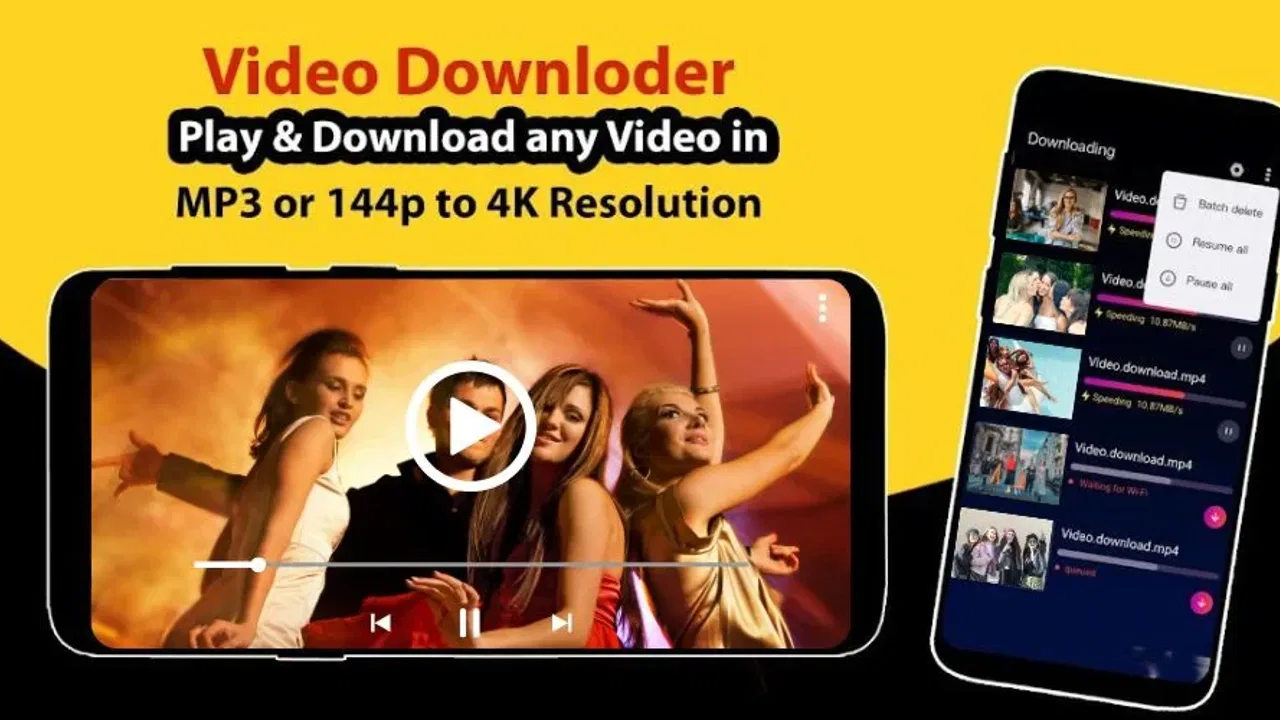
Snaptub-è Video Downloader allows users to download videos and music from various platforms such as YouTube, Facebook, Instagram, and more. It supports multiple resolutions, including HD and 4K, and offers a built-in media player. Users can also convert videos to MP3 format and manage downloads easily within the app.
02Is Snaptub-è Video Downloader safe to use?
While Snaptub-è Video Downloader is popular for its wide array of features, it’s important to download the app from a trusted source to avoid malware. The app itself is generally safe, but users should exercise caution by regularly updating it and being mindful of permissions granted during installation.
03Does Snaptub-è Video Downloader support all video platforms?
Snaptub-è supports a wide range of video platforms, including major sites like YouTube, Facebook, Instagram, and Dailymotion. However, it may not support smaller or less popular sites. Users are encouraged to check the app’s supported platforms list or test their preferred sites before downloading.
04Can Snaptub-è Video Downloader be used on both Android and iOS?
Snaptub-è Video Downloader is primarily available for Android devices. iOS users might face restrictions due to Apple's app store policies. For iOS, there are alternative apps with similar functionalities, but they may not offer the same comprehensive features as Snaptub-è.
05Are there any legal concerns with using Snaptub-è Video Downloader?
Downloading videos using Snaptub-è can raise legal issues, especially if the content is copyrighted. Users must ensure that they have permission to download and use the videos for personal use only. It's crucial to respect the terms of service of the platforms from which content is downloaded.
Pros
- Easy-to-use interface for quick navigation.
- Supports multiple video platforms for downloading.
- Offers high-quality video downloads.
- Includes a built-in media player.
- Free to use with no hidden costs.
Cons
- Contains in-app advertisements.
- Not available on Google Play Store.
- May require permissions for full functionality.
- Potential security risks from third-party sources.
- Limited customer support options.

Snaptub-è Video Downloader
Gallery